OpenClaw AI Agent Workflow Automation Tutorial 2026: Complete Guide

OpenClaw AI agent automation is revolutionizing how businesses streamline their operations and boost productivity. This comprehensive tutorial explores the powerful capabilities of OpenClaw, an innovative AI agent framework that enables seamless workflow automation across diverse tasks. Whether you are a developer looking to build intelligent automation systems or a business professional seeking to optimize repetitive processes, OpenClaw AI agent automation provides the tools you need to succeed.
What is OpenClaw AI Agent Automation?
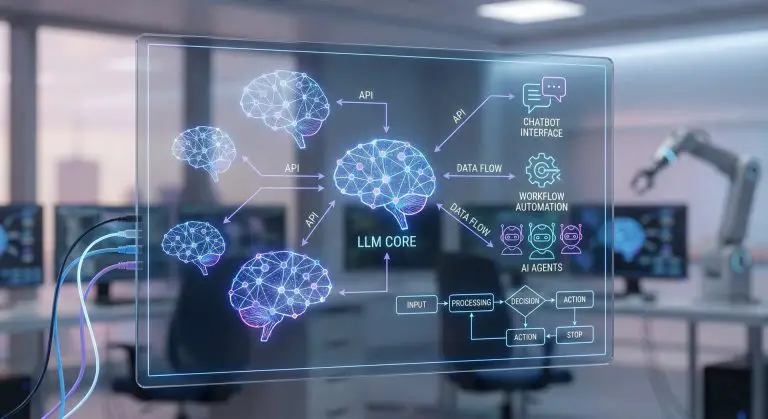
OpenClaw AI agent automation represents a paradigm shift in how we approach task automation. Unlike traditional scripting or RPA tools, OpenClaw leverages large language models and intelligent agent orchestration to handle complex, context-aware workflows. OpenClaw AI agent automation enables multiple specialized agents to collaborate, delegating tasks between them to achieve sophisticated outcomes that would be impossible with monolithic automation approaches.
The architecture of OpenClaw AI agent automation centers on the concept of agent specialization. Each agent can be configured with specific capabilities, knowledge bases, and tools. When a task arrives, the orchestrator determines which agents should handle which parts, enabling parallel processing and intelligent task distribution. This OpenClaw AI agent automation approach mirrors how human teams collaborate, with subject matter experts handling their domains of expertise.
Getting Started with OpenClaw AI Agent Automation
Setting up your first OpenClaw AI agent automation workflow is straightforward. Begin by installing the OpenClaw framework and configuring your AI model connections. OpenClaw supports multiple LLM providers, giving you flexibility in choosing the right models for your use case. This OpenClaw AI agent automation setup process typically takes less than 30 minutes for experienced developers.
After installation, define your agent roles. A typical OpenClaw AI agent automation setup might include a research agent for information gathering, a writing agent for content creation, and a review agent for quality assurance. Each agent receives specific instructions and access to relevant tools. The beauty of OpenClaw AI agent automation lies in how these agents communicate and hand off tasks seamlessly.
Building Your First Automated Workflow
Creating workflows with OpenClaw AI agent automation follows a declarative approach. You define the workflow structure in YAML or JSON, specifying the agents involved, their dependencies, and the handoff conditions. For example, a content marketing workflow might start with a research agent gathering topic information, then pass findings to a writer agent, which submits drafts to an editor agent for review.
This OpenClaw AI agent automation workflow engine handles error conditions gracefully. If an agent encounters an issue it cannot resolve, the workflow can escalate to a human supervisor or retry with modified parameters. OpenClaw AI agent automation includes built-in logging and monitoring, giving you visibility into every step of the process and helping you optimize performance over time.
Advanced OpenClaw AI Agent Automation Techniques
Once you master the basics, explore advanced OpenClaw AI agent automation capabilities. Multi-agent collaboration enables complex problem-solving where agents debate approaches and reach consensus. This OpenClaw AI agent automation feature is particularly valuable for strategic decisions requiring multiple perspectives.
Implement hierarchical agent structures for enterprise-scale automation. A manager agent can oversee multiple specialist agents, coordinating their activities and synthesizing their outputs. This OpenClaw AI agent automation pattern scales efficiently, allowing organizations to automate increasingly sophisticated business processes.
Integrate external tools and APIs to extend agent capabilities. OpenClaw AI agent automation supports web search, database queries, file operations, and custom API calls. Agents can browse websites, query CRM systems, generate reports, and trigger actions in third-party platforms. This extensibility makes OpenClaw AI agent automation suitable for virtually any industry or use case.
Real-World Applications of OpenClaw AI Agent Automation
OpenClaw AI agent automation excels in scenarios requiring judgment, creativity, and multi-step reasoning. Customer support workflows benefit enormously, with triage agents categorizing inquiries, resolution agents handling standard issues, and escalation agents routing complex cases to human specialists. This OpenClaw AI agent automation approach reduces response times while maintaining quality.
Content creation workflows showcase another strength of OpenClaw AI agent automation. Research agents gather source material, writer agents produce drafts, SEO agents optimize for search engines, and editor agents ensure quality. The entire OpenClaw AI agent automation pipeline operates autonomously, producing publication-ready content at scale.
Software development teams use OpenClaw AI agent automation for code review, documentation generation, and testing. Specialized agents analyze code for security issues, generate API documentation from source comments, and create comprehensive test suites. This OpenClaw AI agent automation integration accelerates development cycles while improving code quality.
Best Practices for OpenClaw AI Agent Automation
Successful OpenClaw AI agent automation implementations follow established best practices. Start with well-defined, bounded tasks before tackling open-ended workflows. Clear specifications help agents understand expectations and deliver consistent results. This OpenClaw AI agent automation approach reduces errors and builds confidence in automated systems.
Implement robust error handling and fallback mechanisms. Agents should recognize when they are uncertain and request clarification rather than proceeding with low-confidence actions. OpenClaw AI agent automation includes confidence thresholds and human-in-the-loop options for critical decisions. Designing appropriate escalation paths ensures automation augments rather than replaces human judgment where needed.
Monitor and optimize agent performance continuously. Review logs to identify bottlenecks, confusion patterns, and opportunities for improvement. OpenClaw AI agent automation provides detailed analytics on task completion times, success rates, and inter-agent communication patterns. Use these insights to refine agent instructions and workflow structures.
Security and Compliance Considerations
When deploying OpenClaw AI agent automation in production environments, security is paramount. Implement proper authentication and authorization for agent access to sensitive systems. OpenClaw AI agent automation supports role-based access control, ensuring agents only access resources appropriate to their functions.
Audit trails are essential for compliance. OpenClaw AI agent automation logs all agent actions, decisions, and inter-agent communications. These records satisfy regulatory requirements and enable forensic analysis if issues arise. Configure retention policies appropriate to your industry’s compliance standards.
Data privacy requires careful attention in OpenClaw AI agent automation deployments. Understand how agent inputs and outputs are processed, stored, and potentially used for model training. Implement data masking for sensitive information and ensure compliance with GDPR, CCPA, and other applicable regulations.
Scaling OpenClaw AI Agent Automation
As your OpenClaw AI agent automation maturity grows, scale your deployments strategically. Start with pilot projects in low-risk areas before expanding to mission-critical processes. Measure ROI through time savings, error reduction, and throughput improvements. This OpenClaw AI agent automation scaling approach builds organizational confidence and identifies integration challenges early.
Consider infrastructure requirements for high-volume OpenClaw AI agent automation. Agent orchestration requires compute resources, and LLM API calls incur costs. Design your architecture to handle peak loads gracefully, with queuing mechanisms and auto-scaling capabilities. OpenClaw AI agent automation deployments can be optimized for cost-efficiency through intelligent batching and caching strategies.
Build an automation center of excellence to support scaling. Document successful OpenClaw AI agent automation patterns, train additional developers, and establish governance processes. Sharing knowledge across teams accelerates adoption and prevents redundant efforts.
Integration with Existing Systems
OpenClaw AI agent automation integrates seamlessly with existing enterprise infrastructure. Connectors are available for popular CRM platforms, ERP systems, and communication tools. This OpenClaw AI agent automation interoperability means you can enhance rather than replace your current technology investments.
API-first design principles make custom integrations straightforward. OpenClaw AI agent automation exposes REST endpoints for workflow triggers, status checks, and result retrieval. Webhook support enables real-time notifications when agents complete tasks or encounter exceptions. This OpenClaw AI agent automation flexibility supports complex enterprise architectures.
Future of AI Agent Automation
OpenClaw AI agent automation represents the vanguard of a transformative technology trend. As language models become more capable and agent architectures more sophisticated, the scope of automatable work will expand dramatically. Organizations that master OpenClaw AI agent automation today will be positioned to capitalize on these advancements.
Emerging capabilities include multi-modal agents that process images, audio, and video alongside text. OpenClaw AI agent automation is evolving to support these modalities, enabling automation of previously manual visual and auditory tasks. The future of OpenClaw AI agent automation includes autonomous agents that can learn from experience and improve their performance over time.
Conclusion: Embracing Intelligent Automation
OpenClaw AI agent automation offers unprecedented opportunities to transform business operations. By combining the reasoning capabilities of large language models with structured workflow orchestration, organizations can automate complex cognitive tasks that were previously infeasible. This OpenClaw AI agent automation technology augments human capabilities rather than simply replacing manual steps.
Success with OpenClaw AI agent automation requires thoughtful implementation, starting with well-defined use cases and expanding based on proven results. The investment in learning and deploying OpenClaw AI agent automation pays dividends through increased productivity, improved consistency, and the ability to scale operations without proportional increases in staffing.
As you begin your OpenClaw AI agent automation journey, remember that automation is a means to an end. Focus on business outcomes, measure results rigorously, and iterate based on real-world feedback. With OpenClaw AI agent automation, the future of work is not about replacing humans but about enabling them to focus on what they do best while agents handle routine cognitive tasks.
- About the Author
- Latest Posts

Mark is a senior content editor at Text-Center.com and has more than 20 years of experience with linux and windows operating systems. He also writes for Biteno.com